Etruscan Women
Introduction:
Inspired by scholarship that has often incorrectly assumed gender based on found grave goods in Etruria, this module on the Etruscans invites students to challenge their ideas of what archaeological evidence can tell us about lived experience of women in the ancient world.
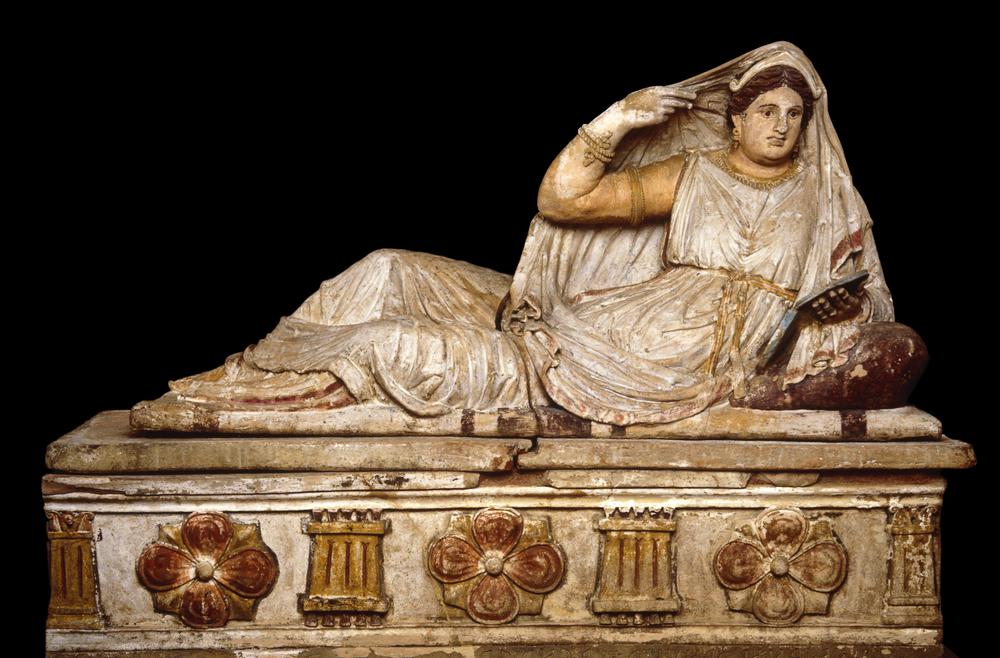
Archaeological finds, like the Sarcophagus of the Spouses and wall paintings at Tarquinia, have been interpreted by scholars as evidence for gender equality in Etruscan society. At the same time, Etruscan grave goods are often assigned gendered meanings that conform to conventional gender norms and, perhaps, incorrectly presume Etruscan practices and experiences. Through an examination of material culture and archaeological evidence, this module invites students to question how depictions of women and men in ancient Etruria can inform us about their lived experiences, if they can at all, and to reevaluate how contemporary conceptions of gender impact our analyses of ancient evidence.
As Dr. Barbara Voss points out in “Sexuality Studies in Archaeology,” modern understandings of gender and sexuality are intrinsically connected with the ancient past and archaeological archive. While this might be the case, the “sexual” and its definitions vary greatly between cultures, and even within them. In interrogating gender and sexuality within the context of the Etruscans we must also avoid what Voss calls the “fallacy of representation: the trap of assuming that sexual representations are snap shots of real bodies and lived sexual practices rather than creative interpretations and ideological presentations.” To begin interacting with the archaeological archive, we must suspend our own conceptions of the “sexual” to avoid interpreting ancient evidence as lived experience. Particularly 19th and 20th century scholarship on the Etruscans has used both literary and archaeological evidence to frame the Etruscans as luxurious, wealthy people in a society that treated women as equals. While some scholarship of this century has argued against surprising claims that the Etruscans were matriarchal (they weren’t), significant portions of Etruscan scholarship lack Voss’s proposed framework for engaging in gender and sexuality studies. This module aims to present, through both primary and secondary sources, the sepulchral archaeological archive from Etruria to question modern conceptions of gender and ancient experience of gender for Etruscan women in conjunction with newer scholarly work that challenges preconceived notions about Etruscan women.
Primary Sources:
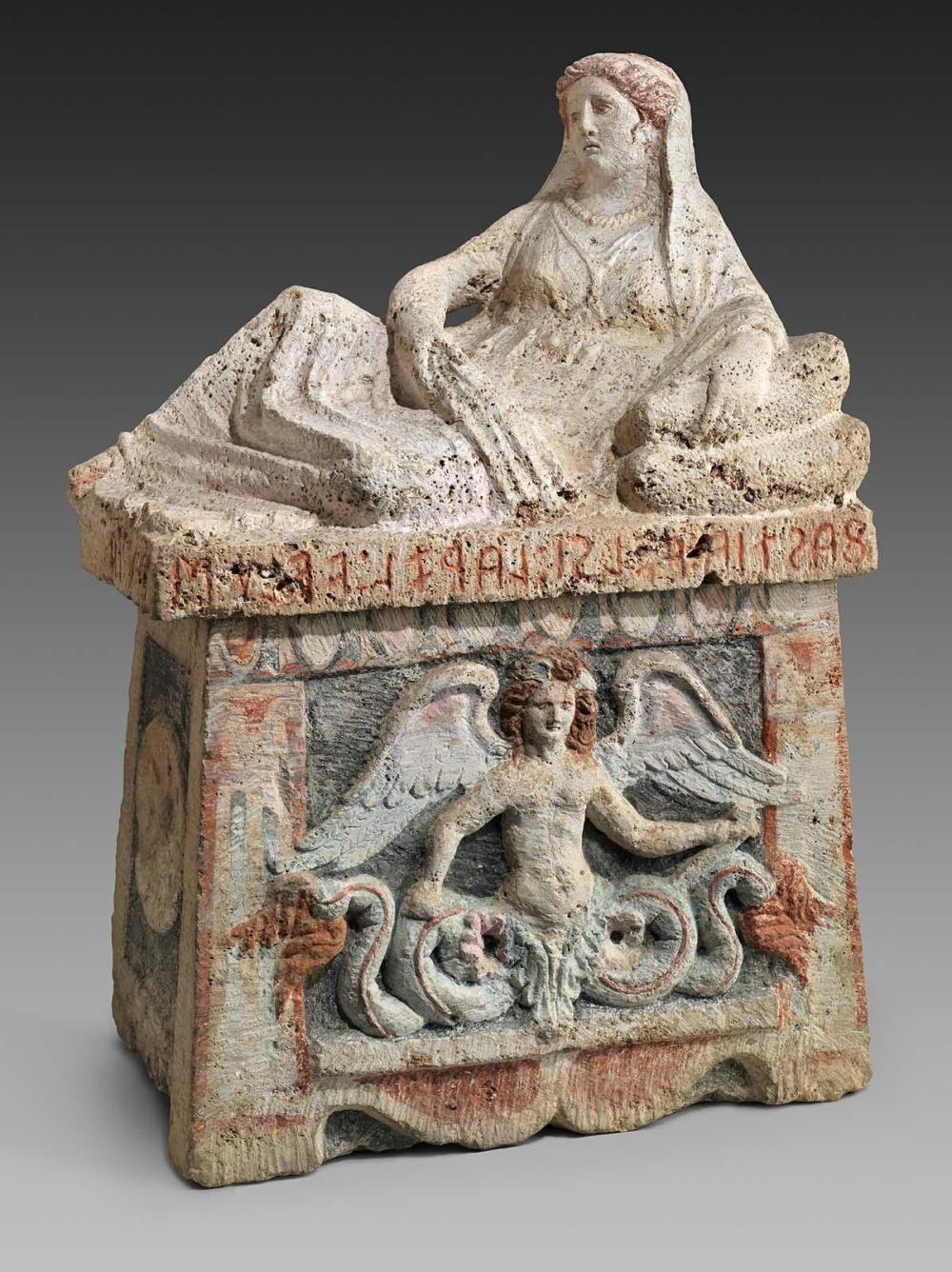
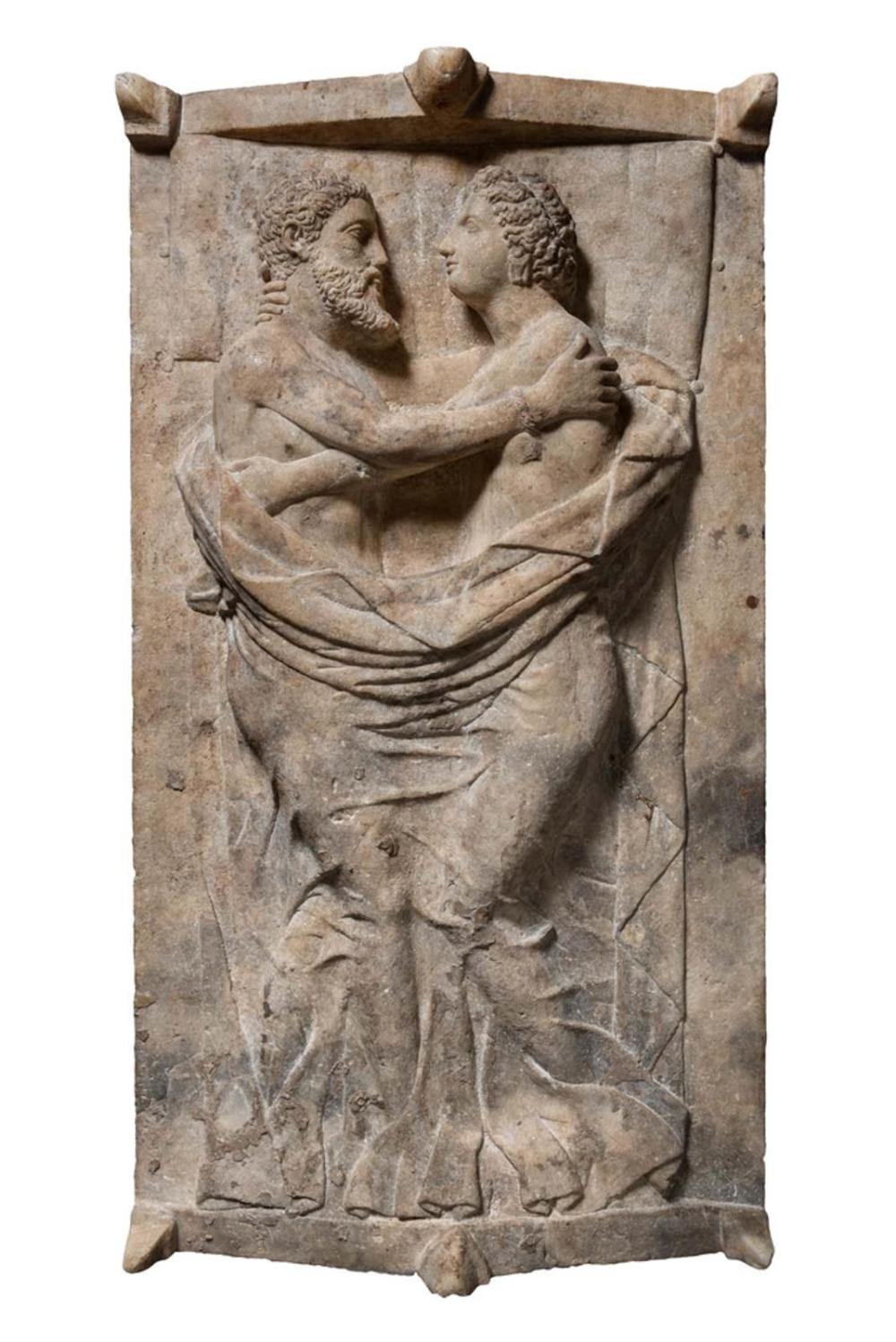
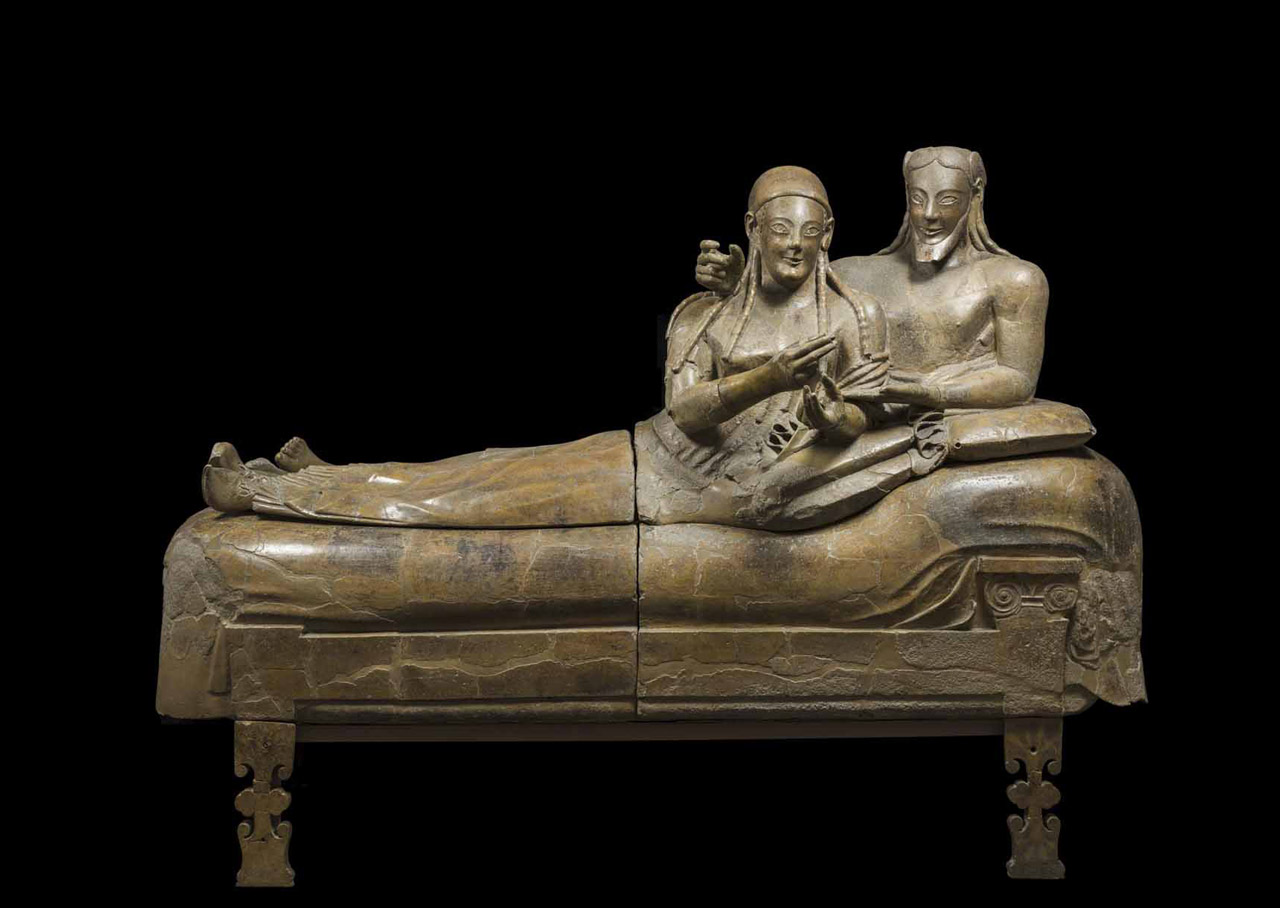
Detailed citation information for each primary source image (in order from top)
- Unknown artist, Cinerary Urn with Cover, Italic, Etruscan, Hellenic Period, late 3rd century B.C. Limestone, 104 x 75 cm, MFA Boston, Boston, MA.
- Unknown artist, Sarcophagus and lid with husband and wife, Italic, Etruscan, Late Classical or Early Hellenic Period, 350-300 B.C. Travertine, 93.3 x 117.4 x 213.8 cm, MFA Boston, Boston, MA.
- Unknown artist, Sarcophagus of the Spouses, Italic, Etruscan, 530-520 B.C. polychrome terracotta, 140 x 202 cm, Museo Nazionale Etrusco, Rome, Italy.
Theopompus, Histories 115 FGrHist F204 =Athenaeus 517d-518a. Chios, 4th cent. B.C.
Sharing wives is an established Etruscan custom. Etruscan women take particular care of their bodies and exercise often, sometimes along with the men, and sometimes by themselves. It is not a disgrace for them to be seen naked. They do not share their couches with their husbands but with the other men who happen to be present, and they propose toasts to anyone they choose. They are expert drinkers and very attractive.
The Etruscans raise all the children that are born, without knowing who their fathers are. The children live the way their parents live, often attending drinking parties and having sexual relations with all the women. It is no disgrace for them to do anything in the open, or to be seen having it done to them, for they consider it a native custom. So far from thinking it disgraceful, they say when someone ask to see the master of the house, and he is making love, that he is doing so-and-so, calling the indecent action by its name.
When they are having sexual relations either with courtesans or within their family, they do as follows: after they have stopped drinking and are about to go to bed, while the lamps are still lit, servants bring in courtesans, or boys, or sometimes even their wives. And when they have enjoyed these they bring in boys, and make love to them. They sometimes make love and have intercourse while people are watching them, but most of the time they put screens woven of sticks around the beds, and throw cloths on top of them.
They are keen on making love to women, but they particularly enjoy boys and youths. The youths in Etruria are very good-looking, because they live in luxury and keep their bodies smooth. In fact all the barbarians in the West use pitch to pull out and shave off the hair on their bodies.
Secondary Sources:
Weigel, Jennifer. 2021. “Spears and Speculation: Deconstructing Gender Assumptions in Etruscan Tombs.” Chronika: The Institute for European and Mediterranean Archaeology Graduate Student Journal 11: 30-41.
Warren, Larissa Bonfante. 1973. “The Women of Etruria.” Arethusa 6(1): 91-101.
Gleba, Margarita. 2008-2009. “Archaeology in Etruria 2003-2009.” Archaeological Reports 55: 103-121.
Nowlin, Jessica. 2021. Etruscan Orientalization. Leiden: Brill.
Shipley, Lucy. 2015. Experiencing Etruscan Pots: Ceramics, Bodies, and Images in Etruria. Oxford: Archaeopress.
Bartolini, Gilda and Federica Pitzalis. “Women of the Princely Families in Etruria.” In Women in Antiquity: Real Women across the Ancient World, edited by Stephanie Lynn Budin and Jean Macintosh Turfa. New York: Routledge.
De Puma, Richard Daniel. 2013. Etruscan Art in the Metropolitan Museum of Art. Yale University Press.
Resources:
A Conceptual Workshop for discussion of these materials is available via the DOWNLOAD ACTIVITIES button above.
See also:
Women of Etruria Display Case, Kelsey Museum of Art, 2017, https://lsa.umich.edu/kelsey/exhibitions/special-exhibitions/past/women-of-etruria.html
Conservation in Action: Etruscan Sarcophogi, MFA Boston, 2011, https://www.mfa.org/collections/conservation/conservationinaction_etruscansarcophagi
The Etruscan Tomb Survey, https://aeichengreen.wixsite.com/etruscan-tomb-survey/
ETRU Museum, https://www.museoetru.it/en