Pandora
Introduction:
This module explores the creation of the first woman, Pandora, and the misogynystic ideology reflected in her myth. Focal points include Pandora’s characterization as an artificial object, the sexual significance of her opening of the jar, and the differences between her and Eve, the first woman of the Biblical tradition.
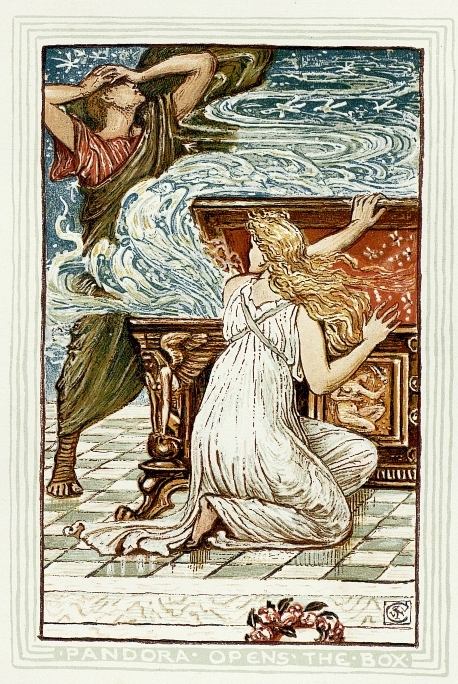
The myth of Pandora is essential to understanding the role and perception of women in ancient Greek culture. Most students are familiar with the basic plot of the myth, particularly the opening of the box, but they do not understand it in gendered terms. In this module, the excessively misogynistic perspective that Hesiod puts forward in his poems is emphasized, and the historical and economic contexts in which he produced his poems, as explained by Marylin Arthur, are used to help elucidate this view.
The module also seeks to highlight how this female creation story differs from that of Eve in the Bible by focusing on the themes of artificiality and deception in the myth. Finally, consideration is given to Froma Zeitlin’s theory that the “hope” that is left in Pandora’s jar (not box!) can be read as a child. This approach encourages students to read the text metaphorically rather than literally, and to remember that myth often uses narrative to discuss larger social issues — in this case, the importance of female sexuality for the continuation and stability of the human race, and the anxiety that importance engendered within a patriarchal culture.
Primary Sources:
Hesiod, Works and Days, lines 1-106 and Theogony, lines 507-616
From Roberto Nickel’s Pressbook, Myths of the Greek and Roman Gods: “Hesiod recounts the myth of the creation of the first woman, Pandora, twice: first in the Theogony and then again in the Works and Days. The two versions each contain unique information and have different emphases. It is important to read each version carefully to compare them and to build a fuller version of the myth by taking both accounts into consideration.”
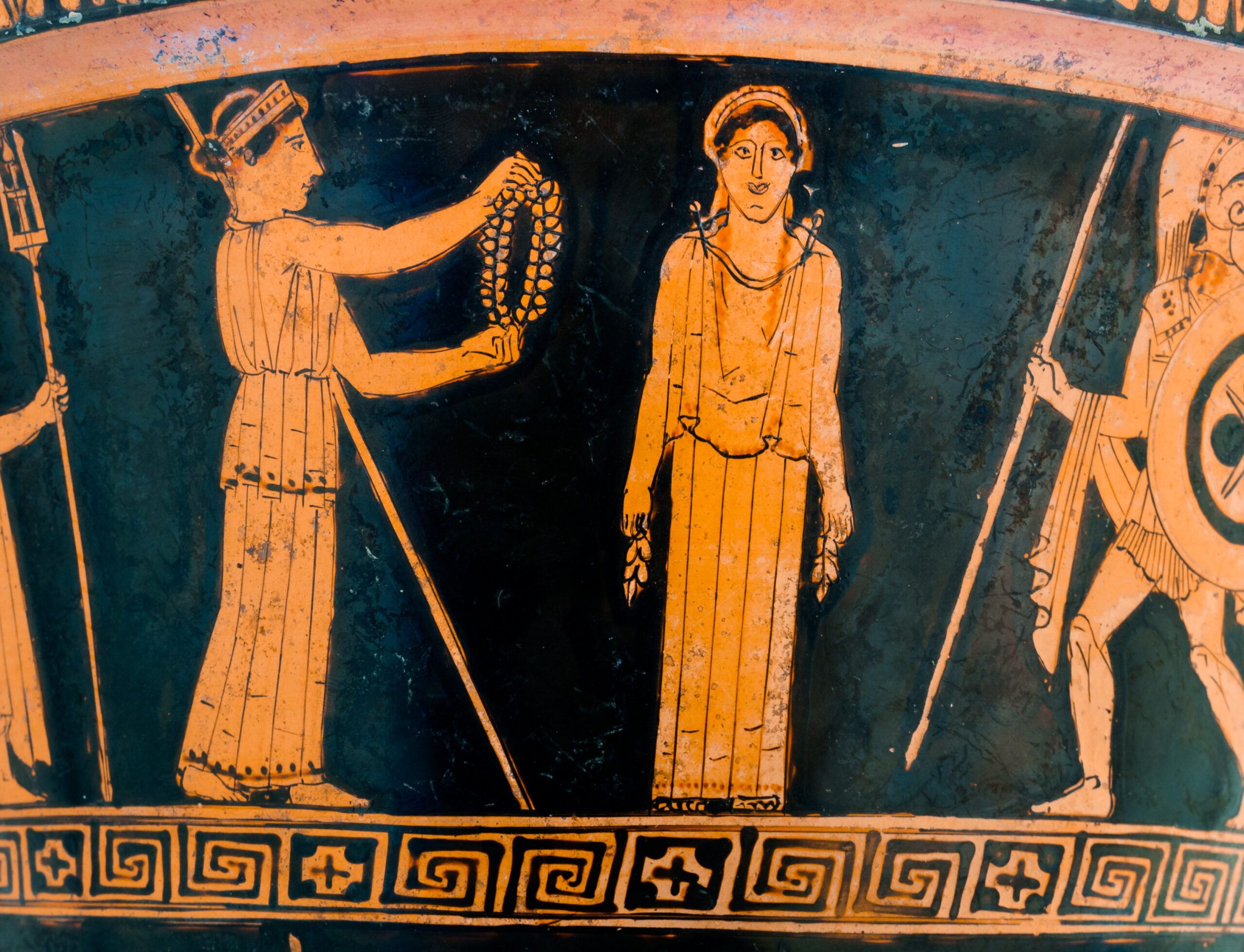
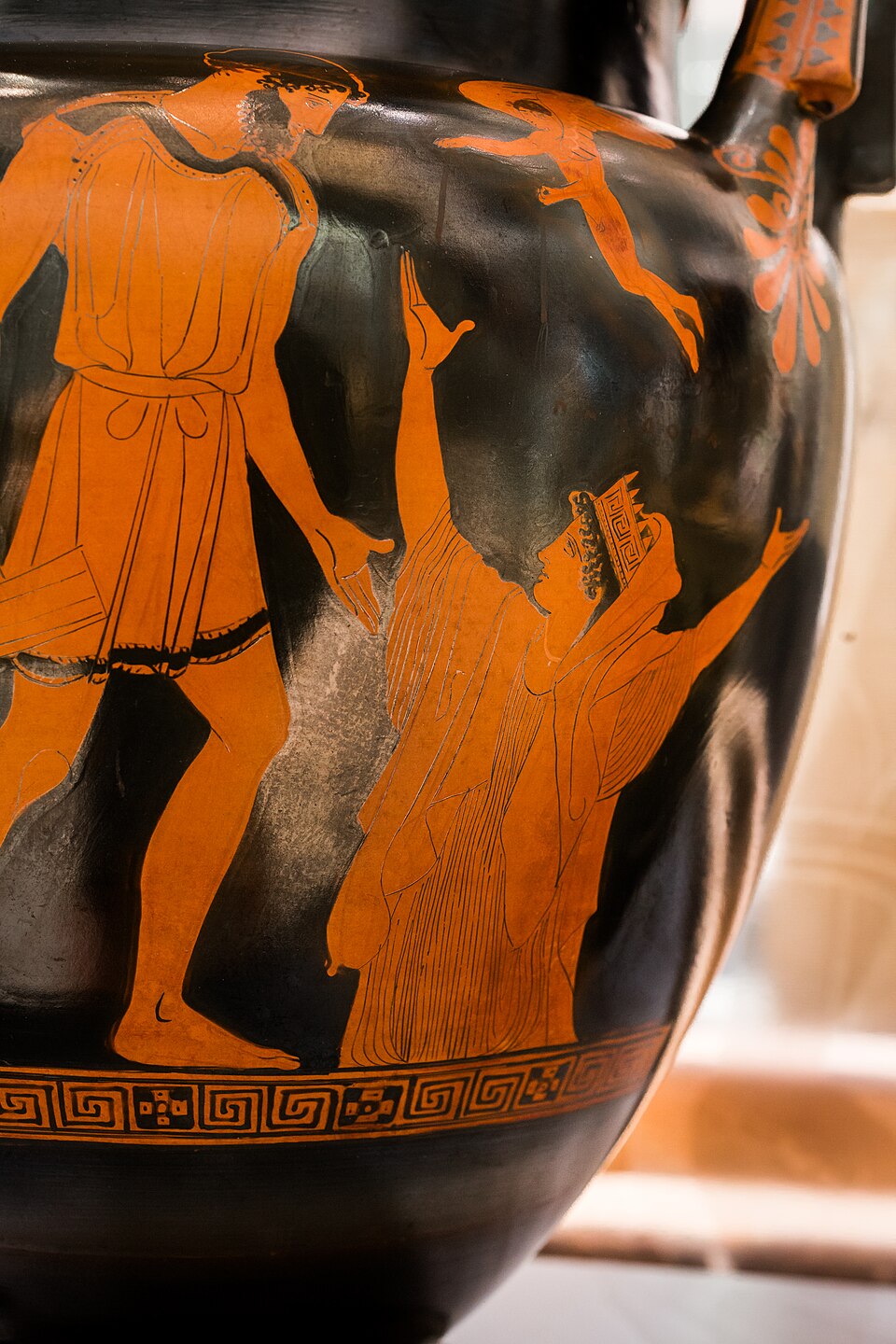
You can also compare these literary accounts with the scant imagery we have of Pandora from vase painting, which sometimes depicts her rising out of the earth or being adorned by other gods.
Secondary Sources:
Arthur, Marylin B. (1973). “Early Greece: The Origins of the Western Attitude toward Women” (pp. 20-27)
Discussion question for Arthur:
- According to Arthur, what social and historical circumstances contribute to the misogynistic views that are encapsulated in the story of Pandora?
Zeitlin, Froma I. (1995). “Signifying Difference: The Myth of Pandora” in Playing the Other: Gender and Society in Classical Greek Literature (pp. 53-72, 82-86).
Discussion questions for Zeitlin:
- Explain what Zeitlin means when she says that Pandora is the “symbol of ambiguous human life” (56).
- What does Hesiod’s account of Pandora leave out? How is this different from the story of Adam and Eve? What, according to Zeitlin, accounts for this difference?
- How does Zeitlin read the figure of “hope in the jar”? How does this reading reflect Hesiod’s misogynistic ideology of gender difference?
Resources:
Click the box labeled “Download Activities” at the top of this page to access lecture notes with discussion questions on Pandora.
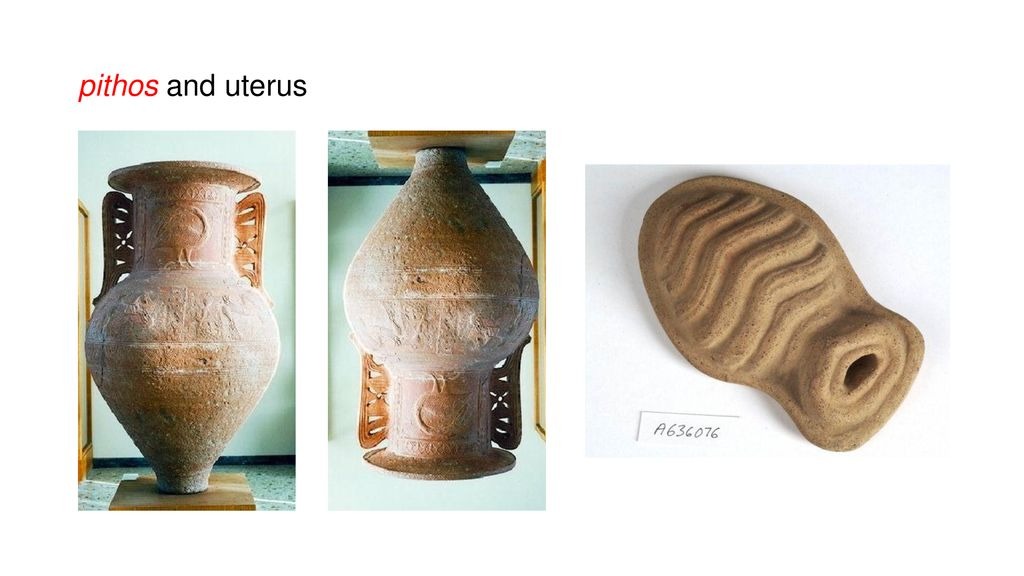
I also like to show students this image of a pithos (large storage jar), which is the term used in Hesiod for Pandora’s “container,” and to note that a) it is not a box, and b) it is a term that is used sometimes in ancient medical texts to describe the womb or uterus (the image on the right is an ancient clay votive of a uterus for comparison).